Master Morihiro Saito
and Iwama Aikido!
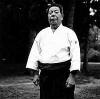
Morihiro Saito (1928–2002) was a teacher of the Japanese martial art of Aikido, who has many students around the world.
Saito's practice of aikido spanned 56 years, from the age of 18 when he first met his master Morihei Ueshiba, aikido's founder, to Saito's death in 2002.
Morihiro was born in Ibaraki Prefecture, Japan. Growing up in a poor farming village in the 1930s and early 40s, he had an interest in historical heroes such as Yagyu Jubei Mitsuyoshi and Goto Matabe.
In Japanese schools at that time, the martial arts of kendo and judo were taught to students, and Saito chose to study kendo.
Immediately following the end of World War II, the carrying of weapons of any kind, as well the practice of martial arts, was prohibited by the GHQ. As a result, Morihiro Saito studied Shinto-ryu karate at the Shudokan.
After a while, his work with the Japanese National Railways transferred him to Iwama, and he was forced to find other martial arts training. He then studied judo as a useful complement to his kendo and karate skills.
In the summer of 1946, however, Saito heard stories about an old man doing strange techniques up on the mountain near Iwama. It seemed that people were confused about what martial art, exactly, this old man was practicing, but one said the man was teaching Ueshiba-ryu Judo.
Meeting aikido founder Morihei Ueshiba O'Sensei
In 1946, a ban was imposed on martial arts practice, which forced Ueshiba into an official 'retirement' from practice for several years.
He took this opportunity to seclude himself in the small town of Iwama, and was engaged in the practice of ascetic training (shugyo), and some believe that it was during this period that Ueshiba perfected his aikido.
At 18 Morihiro Saito joined Morihei Ueshiba for training, which already included several live-in students like Kisshomaru Ueshiba, Koichi Tohei, and Tadashi Abe.
This early training was quite brutal, but after persevering for several years, Morihiro Saito became one of Ueshiba's closest students. Much credit is given to the fortuitous work schedule Saito had with the Japanese National Railways, he worked 24 hours on, 24 off.
As a result, Saito was often the sole training partner of Ueshiba, and had the unique opportunity to train in the practice of the sword and short staff, which occurred early each morning before other students arrived.
Aikido Success Blueprint offers you key action steps on how to speed up your learning. It is a massive collection and an absolute gold-mine of knowledge!
Morihiro Saito
Training in Iwama
Training
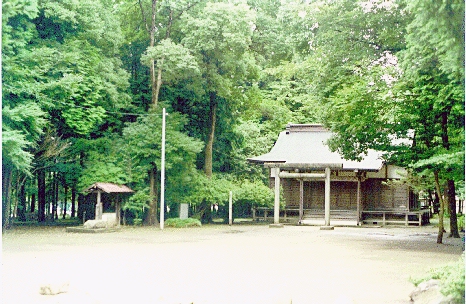
at Iwama dojo included farmwork. The full-time live in students took prayer each morning before
sunrise, two meals of rice porridge a day, and rigorous aikido training, mixed
with large amounts of work on the farm.
As a result of
Morihiro Saito's unique work schedule, it meant that he could train as a live-in student only
every other 24 hours. Eventually, the other live-in students moved away,
and Saito would train alone with O'Sensei.
Although Koichi Tohei trained with Ueshiba for more years than
Saito did, his work allowed him to train as an
uchideshi, for long periods as the only student.
From 1946
until Ueshiba’s passing in 1969, Saito served as Ueshiba's assistant in a
variety of ways at Iwama while his wife served Mrs. Ueshiba. During
Saito’s period as a deshi he taught classes in the Iwama dojo.
Before his death Ueshiba gave Morihiro Saito the responsibility of carrying on the teaching at the Iwama dojo and the position of caretaker of the...
Aiki Jinja Shrine in Iwama.
Training Methodology and Philosophy
Saito's instruction is particularly remembered for its emphasis upon basics, and especially the relationship between the armed and unarmed aspects of the art.
Many of the iwama students were very strong because of the combination of their farm work and rigorous training.
It was quite an opposite culture from Hombu Dojo in Tokyo. Because it
is in the capital of Japan, Hombu’s membership consists of white-collar
workers, intellectuals, businessmen, politicians and university
students.
Any members who came to visit Iwama Dojo from
Hombu must have looked pale and weak from city living to Iwama members.
Indeed, the Iwama students treated them as such and challenged them vigorously.
Kazuo Chiba also emphasized Morihiro Saito's focus upon katai-keiko, or vigorous practice without holding back, which Morihei Ueshiba taught and Saito demonstrated in his methods of teaching and practice.
Apparently, this rigorous training with Saito, which Ueshiba would often
observe, also included intense conditioning exercises, as well as
general farmwork that students at the Iwama dojo were expected to assist
with.
Other students of Morihiro Saito attest to his commitment to carry on Ueshiba's legacy, and to follow and preserve Ueshiba's teachings.
Saito believed that
striking techniques (atemi) are a "vital element" of aikido, and the principles of swordsmanship formed the basis of aikido
techniques. He also advocated training to cope with attacks of other
martial arts, such as kicks.
According to Saito's son,
Hitohiro, Morihiro believed that the basis of all empty-handed,
sword, and staff techniques was the mastery of basic posture
(hanmi). Saito said once the correct posture was mastered, next was a proper kiai shout.
In the beginning of the 1970s aikido students from
outside Japan began traveling to Iwama to train under Saito. The kind of
aikido that Saito's students do are often referred to as Iwama aikido
or Iwama style.
For a period of time, some of Saito's
student's in the West formed a dan ranking network of dojos called Iwama
Ryu and chose to receive grades directly from Saito rather
than the Aikikai although Morihiro Saito never left that
organization.
After his death, his son Hitohiro formed the independent Shinshin Aikishuren Kai.
Some of the Iwama Ryu network dojos
joined Hitohiro, while others chose to remain affiliated with the
Aikikai. For more info Click Here
Harmony of Mind-Body-Spirit
FREE Monthly Newsletter
Ancient Secrets, Master Strategies and Key Action Steps.
Sign Up Now and Grab Your Free Health eBook!

Has this page been useful to YOU? It may benefit other people too! Please go ahead and pass it on - Share via the Link Bar below - many thanks!
Sick of the Elite Control System? Unplug from the Matrix Now!
We Are The Shield a national volunteer powered movement, working across the UK to prevent harm before it happens. Street patrols, trained volunteers, and community support for vulnerable woman and children - Click to Get Involved!





Recent Articles


-
Ki Energy - Vital Life Force
Jan 16, 26 04:27 AM
 Learn how to develop ki energy, vital life force, chi, prana, universal energy, Aikido Success Blueprint, Optimum Health Secrets. FREE gifts, harmony ezine and-
 -
Herbal Remedies to Cleanse and Purify
Jan 16, 26 04:26 AM
 Aikido Health Centre info on herbal remedies, herbs, herbalism, nutrition, and food. Optimum Health Secrets for amazing results! FREE gifts, harmony ezine, and-
 -
Health Games For Children
Jan 16, 26 04:24 AM
 Unique health games for children to create interest in their own health. Plus Optimum Health Secrets, Harmony of Mind-Body-Spirit, FREE gifts and much more!