We Spotlight Aikido
Master Hiroshi Tada Sensei
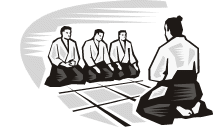
Hiroshi Tada born in Nagasaki, Japan in 1929, and a 9th dan Aikikai Shihan.
As a child Hiroshi practiced archery, Kendo at junior high school, and karate at Waseda University, while studying law, and graduated in 1952.
He also holds a dan grade in karate.
Tada began training at Hombu Dojo of Morihei Ueshiba in March, 1950, became an instructor in 1954, and was promoted to 6th dan in 1957.
He was sent to Italy in October 1964 and established a dojo in 1966. He was promoted to 8th dan in 1969 and returned to Japan in 1971.
He taught at the Aikikai Hombu Dojo every Thursday for many years.
Along with his extensive studies of Aikido he studied breathing exercises and yoga with Tempu Nakamura, until he was sent to Europe in 1964. The Tempukai studied science, medicine, and unification of mind and body.
He studied with the Ichikukai, who practised misogi ritual purification.
To join he had to sit in seiza for 10 hours a day for about 4 days chanting a shinto prayer. After this they met every month and practised ringing a hand bell 10,000 times, until it became automatic and clear.
Master Hiroshi Tada developed a unique system of breathing and meditation exercises called Ki no Renma (Cultivation of Ki) as a supplement to aikido.
Morihei Ueshiba developed Aikido from his combat studies of Daito-ryu Aiki jujutsu with Sokaku Takeda, and his spiritual studies with Onisaburi Deguchi.
Aikido Success Blueprint shows you how to fast-track your ability to learn aikido. A massive gold-mine of unique knowledge with Key Action Steps!
Harmony of Mind-Body-Spirit
Free Monthly Newsletter
Ancient secrets, master strategies + action steps for results.
Sign Up Now and get your Free Aikido & Health Ebook

Master Hiroshi Tada
Offered Unique Training
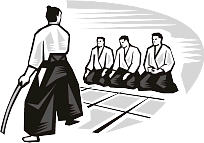
Hiroshi Tada decided to focus on Aikido training after graduating from university. This is because he thought that the heart of aikido was the essence of Japanese culture and important to Japan's future.
In his 20's & 30's, every morning, he ran several miles. He then struck a bundle of brushwood around 500 times, which developed his natural power. This was a practice shown by Morihei Ueshiba, that he passes on to his own students.
He taught this as a way of practicing striking, and said that footwork, hand movement, and ki development through kokyu-ho practice are very important. He said 5-6 hours of personal training every day leads to expertise.
He teaches the importance of a healthy diet, and that eating and drinking are as important as correct breathing to absorb ki. The avoidance of excesses, like smoking and alcohol, help develop sensitivity of the senses to make them sharp.
He thought O-Sensei didn't talk much about how to do techniques, was the best way was to learn through the body, by doing them. In his classes he tries to pass on the feeling and knowledge he experienced during training with founder.
He said that there are many benefits to be gained from Aikido practise... spiritual aspects, understanding Japanese culture, moving meditation, ki development, becoming stronger for physical confrontation, better health - More Here
Has this page been useful to YOU? It may benefit other people too! Please go ahead and pass it on - Share via the Link Bar below - many thanks!
Sick of the Elite Control System? Unplug from the Matrix Now!
We Are The Shield a national volunteer powered movement, working across the UK to prevent harm before it happens. Street patrols, trained volunteers, and community support for vulnerable woman and children - Click to Get Involved!